
Introduction
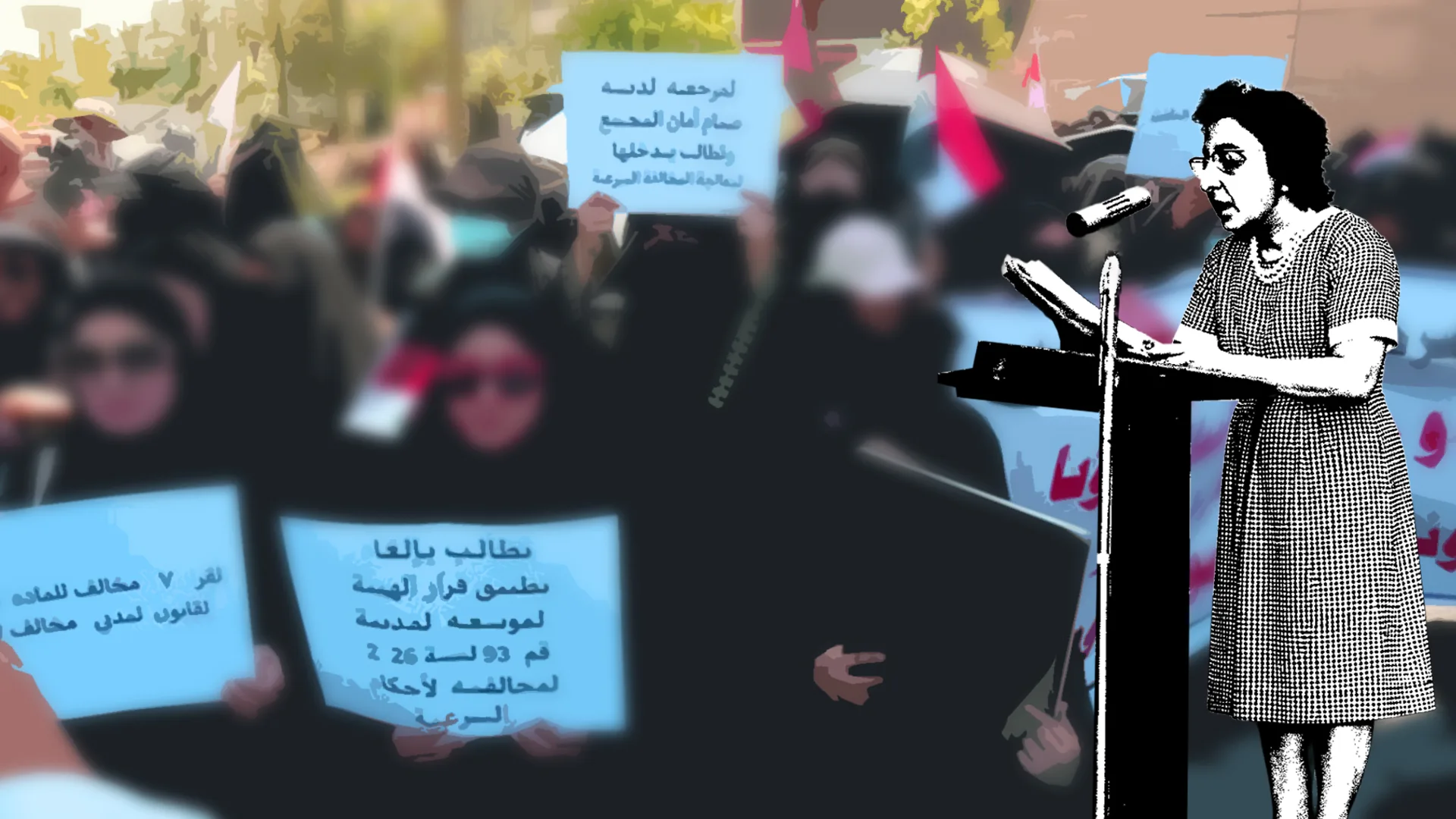
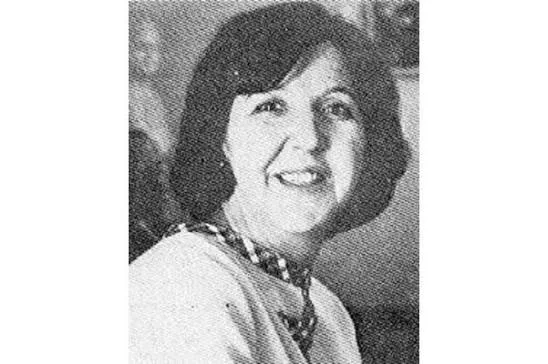
More than sixty years ago, Naziha al-Dulaimi wrote about illiteracy and women’s rights, calling for equality in education, healthcare, politics, and every other aspect of life.Al-Dulaimi was an Iraqi doctor and women’s rights activist, a pioneer of Iraq’s feminist movement, and the first female minister in Iraq and the Arab world.
Revisiting her article, written in July 1958, feels particularly necessary today. At the time, she criticised the lack of equality between women and men in marriage, divorce, property ownership, and childcare. She argued that inherited customs and laws undermined women’s dignity as human beings entitled to equal rights. A year later, Iraq enacted Personal Status Law No. 188 of 1959, at a time when the women’s movement was working towards a more unified and equitable legal framework for women.
Today, more than six decades later, the debate is no longer about how to improve that law and achieve full equality, but about defending the minimum protections it once provided. Al-Dulaimi wrote of an Iraq that should move away from sectarian and tribal customs towards citizenship and the rule of law. The Jaafari Code, however, takes Iraqi families in the opposite direction: from a unified legal framework to multiple sets of rules, and from women’s rights as citizens to rights determined by their religious sect and marriage contract.

For many outside Iraq, the “Jaafari Code” is a name they are hearing for the first time, or an issue they are only now discovering as messages of solidarity spread across social media. For Iraqi women, however, it has been a reality for more than a year. Approved by the Iraqi Parliament in August 2025, the code is a collection of provisions derived from Jaafari Shia jurisprudence governing marriage, divorce, child custody, and inheritance. It diminishes the protections previously afforded to women and children under the Personal Status Law. Although presented as an option, it does not guarantee women the freedom to choose. A husband can bring an existing marriage contract under its provisions without his wife’s consent, and a woman may find herself subject to its rules even after divorce, at the request of her former husband.
Its consequences emerge in the most sensitive aspects of everyday life. A mother’s custody ends when her child turns seven, and she loses custody if she remarries, without making the child’s best interests the determining factor. The code also denies a wife the right to inherit her husband’s land: she receives neither a share of the land nor its value. Her entitlement to buildings and trees is limited to a share of their monetary value, which the other heirs can pay in cash and require her to accept. Provisions governing marriage based on puberty also open the door to child marriage, threatening girls’ childhoods, education, and health.
Reading al-Dulaimi’s ideas today does more than revisit the history of Iraq’s feminist movement, it reveals the extent of the regression. The rights she demanded in 1958, including women’s freedom in marriage, divorce, and equality in childcare, remain contested. What was once a struggle to expand Iraqi women’s rights has become a battle to protect what remains of them.
Iraqi women’s rights
Women have the same natural rights as any other human being. By rights, we mean the absolute human rights inherent in life itself. It is self-evident that these rights are affected by the development of societies and economic relations, with new rights emerging while others become obsolete. A clear example can be found in the considerable difference between the Declaration of the Rights of Man adopted in France in 1789 and the Universal Declaration of Human Rights adopted by the United Nations in 1948. The latter introduced new rights that had not been included in the former, such as the right to strike, the right to form trade unions, and equal pay for equal work, among others.
Women’s rights, like those of any other, evolve as economic and social conditions develop. Therefore, studying women’s rights in any period or country requires a thorough examination of the economic and social stage through which that country is passing.
In presenting this article, our primary concern is to examine the rights of Iraqi women in light of the stage Iraq is passing through and the natural rights of every individual within it.
Iraq, in general, remains dominated by social relations characteristic of an agrarian stage, while industrial relations remain limited and largely confined to some of the major cities.
Human rights in Iraq are derived from the very fabric of agrarian society. They may be interpreted by the ruling class as the landowner’s freedom to own land and farmers and exercise control over them, or they may be interpreted, as the bourgeoisie interprets them, as the freedom to exploit relations of production and those who produce. The Universal Declaration of Human Rights adopted by the United Nations, however, placed limits on this by establishing an international declaration which, despite its many shortcomings, recognised many of the rights of the emerging classes.
In 1946, a special commission was established by the Economic and Social Council to examine women’s rights, and specific provisions concerning women’s rights were incorporated into the Universal Declaration of Human Rights.
Now, we shall enumerate the rights of Iraqi women across their different ethnicities, nationalities, and social positions, before examining which of these rights they possess in practice.
The rights of women in rural areas are:
- The right to own land.
- The right to receive wages for their work on the land.
- The right to live freely and with dignity.
- The right to education, particularly vocational education.
- The right to medical care.
- The right to adequate clothing and housing.
- The right to participate in the scientific and artistic life that should be accessible to all people.
- The right to express their opinions, establish democratic organisations, and participate in other democratic organisations.
- The right to vote and to stand for election to all bodies of authority, without restriction or discrimination.
- Civil rights equal to those of men in matters of property, marriage, and children.
- The right to state protection of motherhood and childhood, and to the establishment of an adequate number of maternity facilities, consultation centres for women and children, kindergartens, and nurseries.
As for the rights of women in the city, in addition to those mentioned above, other rights emerge:
1. The guaranteed right to work.
2. The right of women to freely choose any profession or occupation.
3. The right to hold any public administrative position.
4. Equal opportunities for advancement in all fields.
5. Equal pay for equal work.
6. Equal rights to social security.
7. Paid leave for pregnancy and childbirth.
These are the rights that all women in Iraq should enjoy, regardless of their beliefs, nationalities, or classes. Yet when we examine the reality of Iraqi women, we find that they are entirely deprived of them.
The female farmer not only owns no land but receives no wages whatsoever for her work in the fields. She works for her husband, while the couple’s share is itself extremely small. In the north, they are given a share based on an equal division with the landowner. In the south, however, in the Tigris basin, shares are allocated according to primitive local rules: the produce is divided into five piles, one of which is taken as fees and handed to the landowner, two are given to the landowner in return for the rent of the land and the horse, and the remaining two go to the farmer himself. Between 2.5 and 5 percent of the produce is also taken as a tax for the landowner, while the seeds borrowed by the farmer are deducted from his share. In Amarah, of Maysan Governorate, the farmer is also charged the expenses of the hawshiya (the feudal landowner’s armed guards), the wages of the mullahs (religious clerics), the wages of agents (the landowner’s representatives) and sarakeel (farm overseers who supervised farmers on the landowner’s behalf), and the expenses of the mudhif (a tribal guesthouse and meeting hall).
In the Euphrates basin, the farmer receives two shares of the produce while three shares go to the landowner. In reality, the farmer receives no more than a quarter of the total production because of the numerous taxes imposed on it. The farmer’s share was estimated at 50 dinars annually during the war years, and even this was not received in cash. He would often find himself in debt after the crop was sold, with debts accumulating and binding him to the landowner. It should also be noted that this annual income is generated not by the farmer’s labour alone, but by his labour together with that of his wife or wives and children. If the female farmer were to receive even a share equivalent to the farmer’s already meagre share in return for her continuous labour, the income of the family would double.
On the other hand, the female farmer’s right to own land is naturally linked to the farmer’s own right to it, and obtaining this right would improve the condition of the farmer family. What is said about the female farmer’s right to own and make use of land applies equally to all rural women, so that they may become productive members of society, given the connection between agricultural production and the land.
As for her right to live a free and dignified life, this is entirely absent in the countryside. Women are humiliated and looked down upon, given no weight whatsoever, and regarded as inferior in terms of all their capabilities. This chronic degradation has led women themselves to lose all confidence in themselves and to doubt their own abilities. It is therefore extremely important for our women’s movement to pay attention to this issue and to transform the ignorant female farmer into a person who is conscious of her human dignity and defends it, for such awareness is vital to women attaining all their natural rights.
As for her right to education, particularly vocational education, women in Iraq possess nothing of this right. There are only 20 rural schools for girls throughout the entire country, attended by 1,249 students and staffed by 71 female teachers. These schools are distributed according to the following table:

This means that there is one rural school for every 69,800 rural women, one school place for every 1,160 rural women, and one rural female teacher for every 20,000 rural women.
Therefore, a broad campaign should be launched to demand the opening of literacy centres, at a ratio of one female teacher for every 20 illiterate women and one literacy school for every 120 illiterate women. Emphasis should also be placed on opening girls’ schools in villages and rural areas, and on demanding the expansion of teacher-training institutions so that greater numbers of female teachers can graduate when the country is in such great need of them.
Women in cities have better access to education than those in the countryside, but educated and cultured women remain an extremely small minority.
There are 204 primary schools for girls, attended by 45,600 students, compared with 901 schools for boys, attended by 153,635 students. This means that the number of female students is less than one-third of the number of male primary-school students. There are only 31 secondary schools for girls throughout Iraq, compared with 73 for boys. There are two vocational schools for girls in Baghdad: the School of Domestic Arts and another for nursing. In higher education institutions, there are only 867 female students. This is despite the fact that the illiteracy rate among urban women is 75 percent. As for attention to children’s cultural development and their care by the state, this does not exist in our country.
As for the healthcare available to Iraqi women, whose situation in this respect is the same as that of all Iraqi citizens. Official statistics on the number of health institutions distributed throughout the country up to the 1950s show that there were 71 public hospitals, 11 private hospitals, and 403 dispensaries. These hospitals include those located in the centres of the cities and in some of their districts. Together, they contained 4,900 beds, of which 4,475 were free of charge. If we consider that only around 2,000 beds were available to women, this means there was one bed for every 1,373 women. Moreover, these beds include those allocated to ophthalmic diseases, syphilis, fevers, leprosy, paediatrics, and neurological conditions.
The number of physicians registered in Iraq up to the 1950s was 811, of whom 444 were in Baghdad. As for maternity hospitals, there are currently three specialised hospitals with no more than 200 beds in total. Outside these, such facilities are entirely absent from districts, subdistricts, and villages.
Women’s struggles, therefore, must be directed towards increasing the number of hospitals in general, and particularly the number of hospitals dedicated to childbirth and women’s diseases.
Iraqi women’s civil rights are not equal to those of men with regard to marriage, divorce, property ownership, and children. This is due to the persistence of obsolete systems and laws inherited from feudal eras, resulting in a grave violation of women’s dignity as human beings entitled to these same rights. A woman has no right to express her opinion regarding marriage or divorce, inherits only half the share of her brother, and has no rights over the children to whom she gives birth and whom she raises.
Women in cities do not have a guaranteed right to work. This is due to widespread unemployment among members of the working classes and the absence of sufficient industry to absorb the enormous number of unemployed people. How, then, can a woman hope to find work when she is regarded as inferior, except perhaps when she is employed at lower wages for equal work? At the same time, working women’s need for employment grows day by day as living conditions deteriorate, adding ever greater numbers of women to the ranks of the unemployed.

In most industries, female workers do not receive equal pay for equal work, as is the case in textile, soap, and brick factories.
Female workers are deprived of leave before and after childbirth, and pregnant women are frequently fired from their jobs. Women with nursing infants are also fired because they are given no opportunity to breastfeed their children during working hours. Some may argue that these rights are enshrined in the Labour Law of 1936. Yes, they are provided for, but they are not implemented in practice.
As protesters filled Tishreen’s squares, artists answered with songs: angry, hopeful and uncompromising. Music became an act of solidarity, a record of resistance and an answer to repression.
Women do not have equal opportunities to demonstrate their abilities in different fields. They are frequently barred from certain jobs or from holding various positions for no reason other than that they are women.
They are also denied the right to organise themselves in organisations that defend their interests, or to express their opinions freely like other citizens, a right that women have succeeded in obtaining in most countries of the world, including various Arab countries.
It is clear from all the above that Iraqi women are deprived of all the rights stipulated in the Universal Declaration of Human Rights of 1948, adopted by the United Nations, and in the declaration of women’s rights adopted by the Third World Women’s Congress in 1953. Iraqi women therefore have no choice but to take up the struggle to secure these rights by every means available.
Original source: Al-thakafa al-Jadeda.


